Cardio5 min read
Stepper, bike, rower or treadmill: choosing cardio for a small apartment
Six machines, compared on the numbers that decide whether one fits your apartment, with a plain note wherever a listing does not give them.
On this page
If floor space is the constraint, buy a stepper: ours stands 13 by 12 by 8 in (33 by 30 by 20 cm) and arrives assembled. If you would rather train sitting down, a folding bike. If you want your back and abs in the work too, a folding rower. A treadmill asks for the most planning: ours lists neither a maximum user weight nor its dimensions, and you need both before you buy one.
What follows compares six of the cardio machines we carry on footprint, user weight, folding and setup, using only what each product page states. Where a page does not give a number, the table says so.
How much cardio you are buying a machine for
The US Physical Activity Guidelines ask adults for at least 150 to 300 minutes of moderate-intensity aerobic activity a week. The CDC and the NHS both give 75 minutes of vigorous-intensity activity as the alternative to 150 minutes of moderate. That is the aerobic target.
Intensity is easier to judge than it sounds. The CDC's talk test: at moderate intensity you can talk but not sing, and at vigorous intensity you cannot say more than a few words without pausing for breath. The NHS lists riding a bike as moderate, and walking up the stairs and riding fast or on hills as vigorous. So the machine matters less than the effort. Use the talk test, and pick the one you will actually use.
The six side by side
| Machine | Size stated | Max user weight | Folds | Setup |
|---|---|---|---|---|
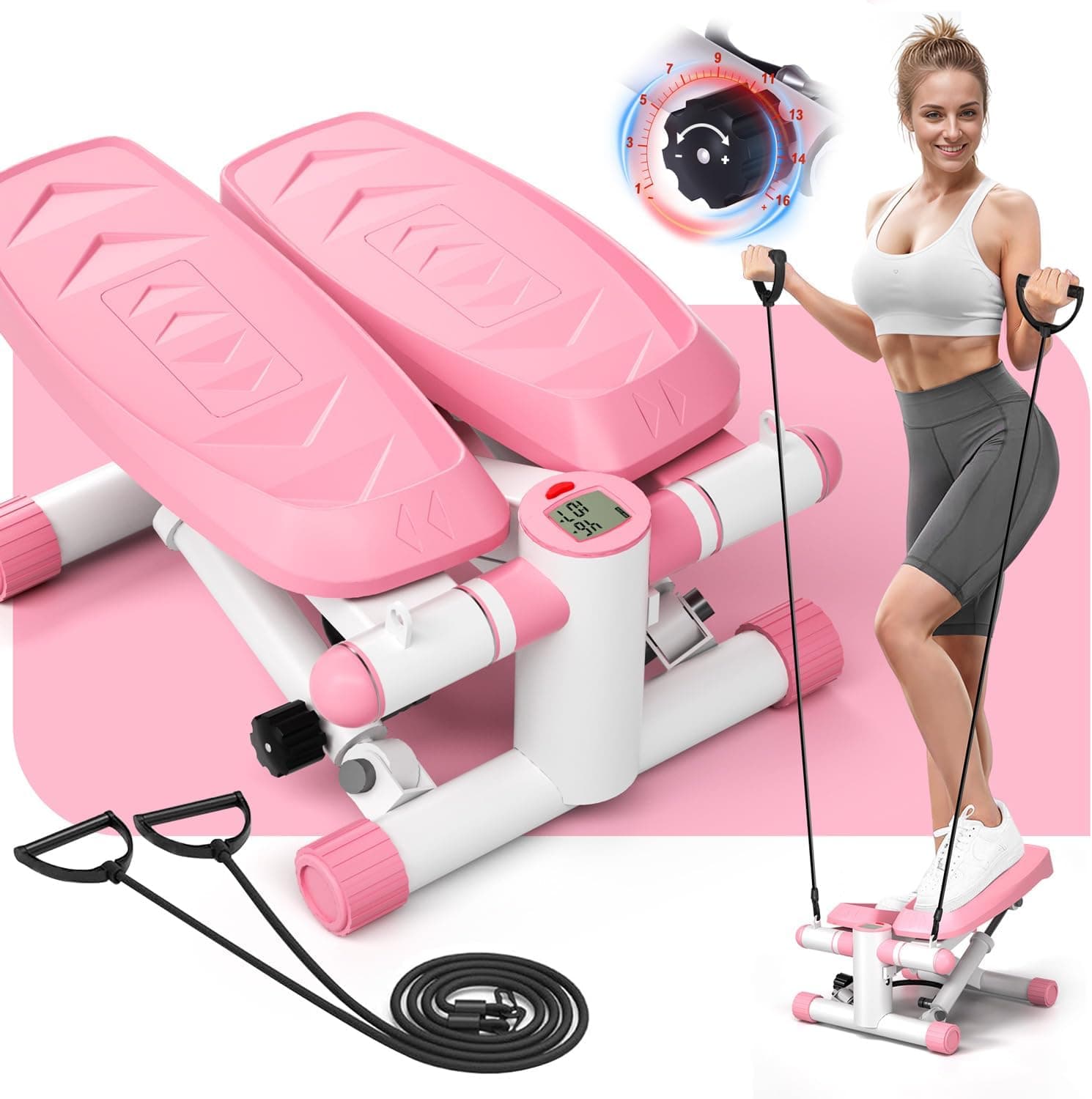
| Adjustable stair stepper | 13 x 12 x 8 in (33 x 30 x 20 cm) | 330 lb (150 kg) | Not stated | Arrives fully assembled |
| Mini stepper with bands | 16 x 12 x 14 in (41 x 30 x 36 cm) | 300 lb (136 kg) | Not stated | Ready out of the box |
| Folding exercise bike | Not stated | 300 lb (136 kg) | Yes, with wheels | Unfold and pin, per the listing |
| Foldable rowing machine | Not stated | 330 lb (150 kg) | Yes, with rollers | Not stated |
| Compact electric treadmill | Not stated | Not stated | Yes, with wheels | Not stated |
| Under-desk bike | 16 x 14 x 12.6 in (41 x 35 x 32 cm) | Not stated | Not stated; weighs 12 lb (5.5 kg) | Not stated |
Steppers: the smallest stated footprint
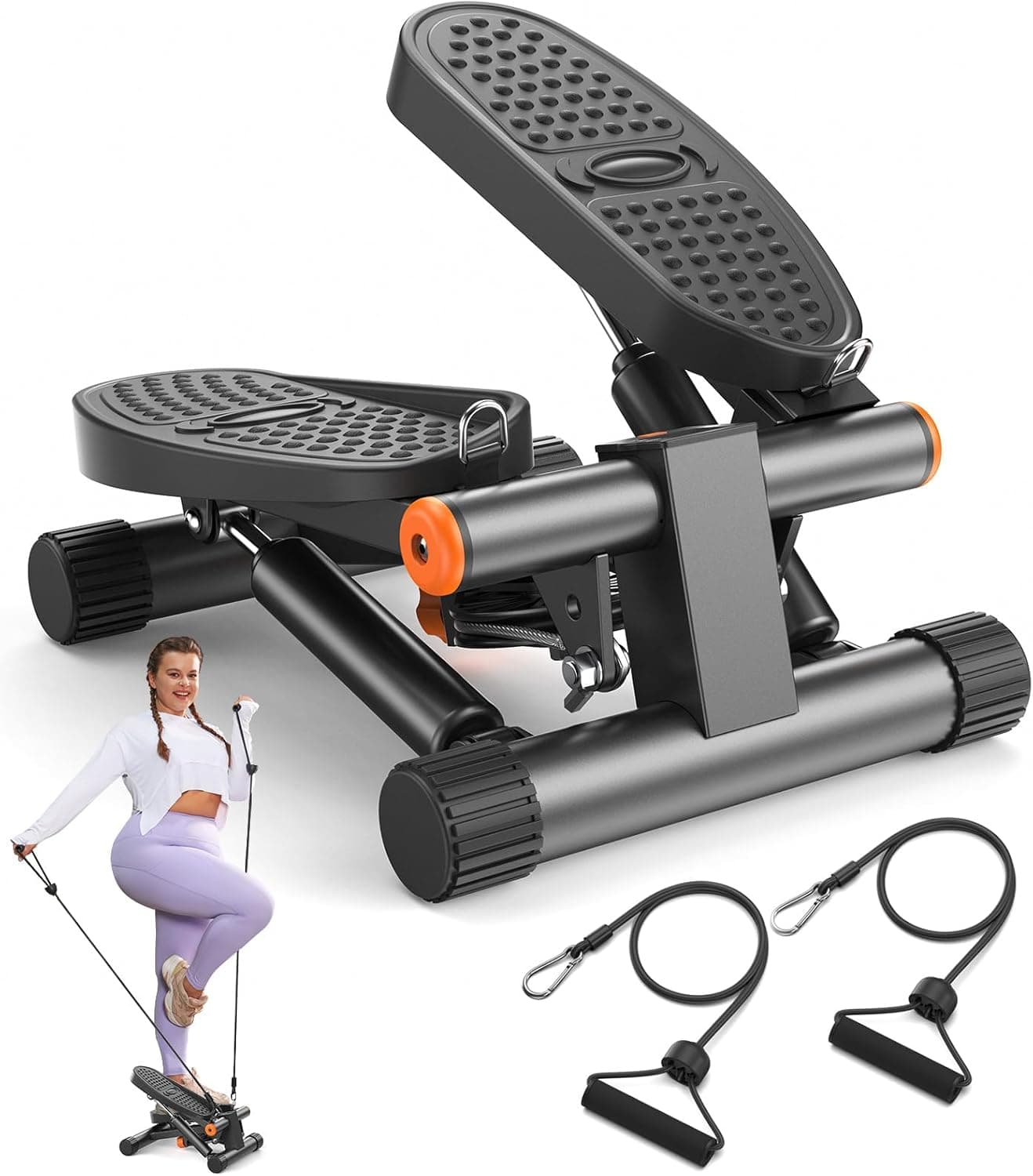
The adjustable stair stepper has the smallest stated size of the six. It takes up 13 by 12 by 8 in (33 by 30 by 20 cm), holds users up to 330 lb (150 kg), and comes fully assembled. There are 16 resistance levels, and the 16th locks the pedals in place. A small display counts steps and time.
The mini stepper with bands is a little larger, 16 by 12 by 14 in (41 by 30 by 36 cm), weighs 16 lb (7.3 kg) and holds up to 300 lb (136 kg). It is also ready to use out of the box. Resistance is hydraulic, with a knob to set the step height, and it comes with two resistance bands for arm work while you step. The listing notes that the hydraulic resistance holds for about 30 minutes and then eases off, so it suits sessions of that length or shorter.
The mini stepper's listing says it stores in a small corner; the adjustable stepper's listing does not say how it stores. Only the mini stepper comes with something for your arms.
Bikes: cardio sitting down
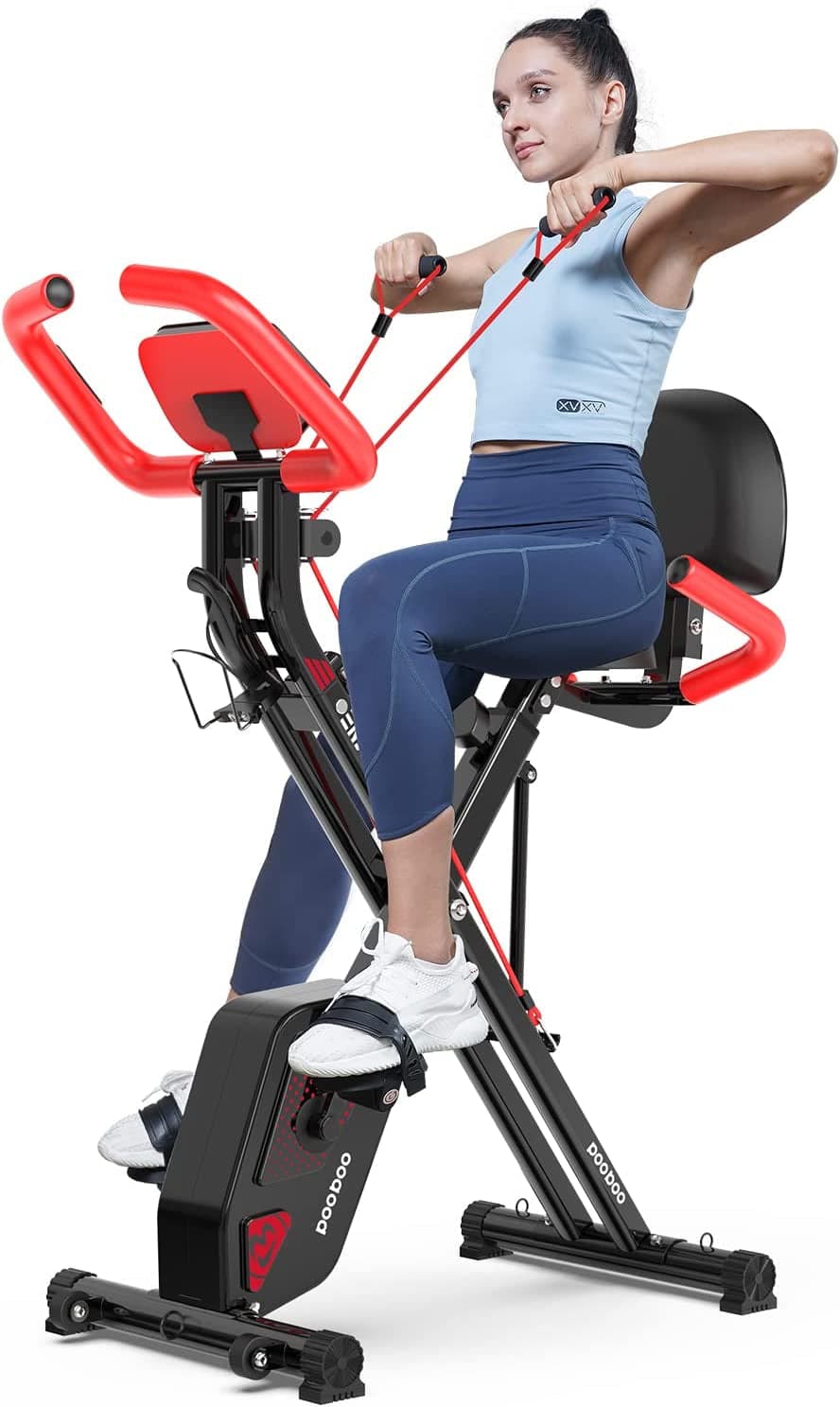
The folding exercise bike is steel, holds users up to 300 lb (136 kg), and is sized for riders from 4 ft 11 in to 6 ft 3 in (150 to 191 cm). It has 8 levels of magnetic resistance, an adjustable seat, a bottle holder and a holder for a mobile device. It folds, and it has transport wheels. The listing does not give its folded or unfolded size.
You ride seated, and the device holder lets you watch something as you go.
A rower: back and abs included
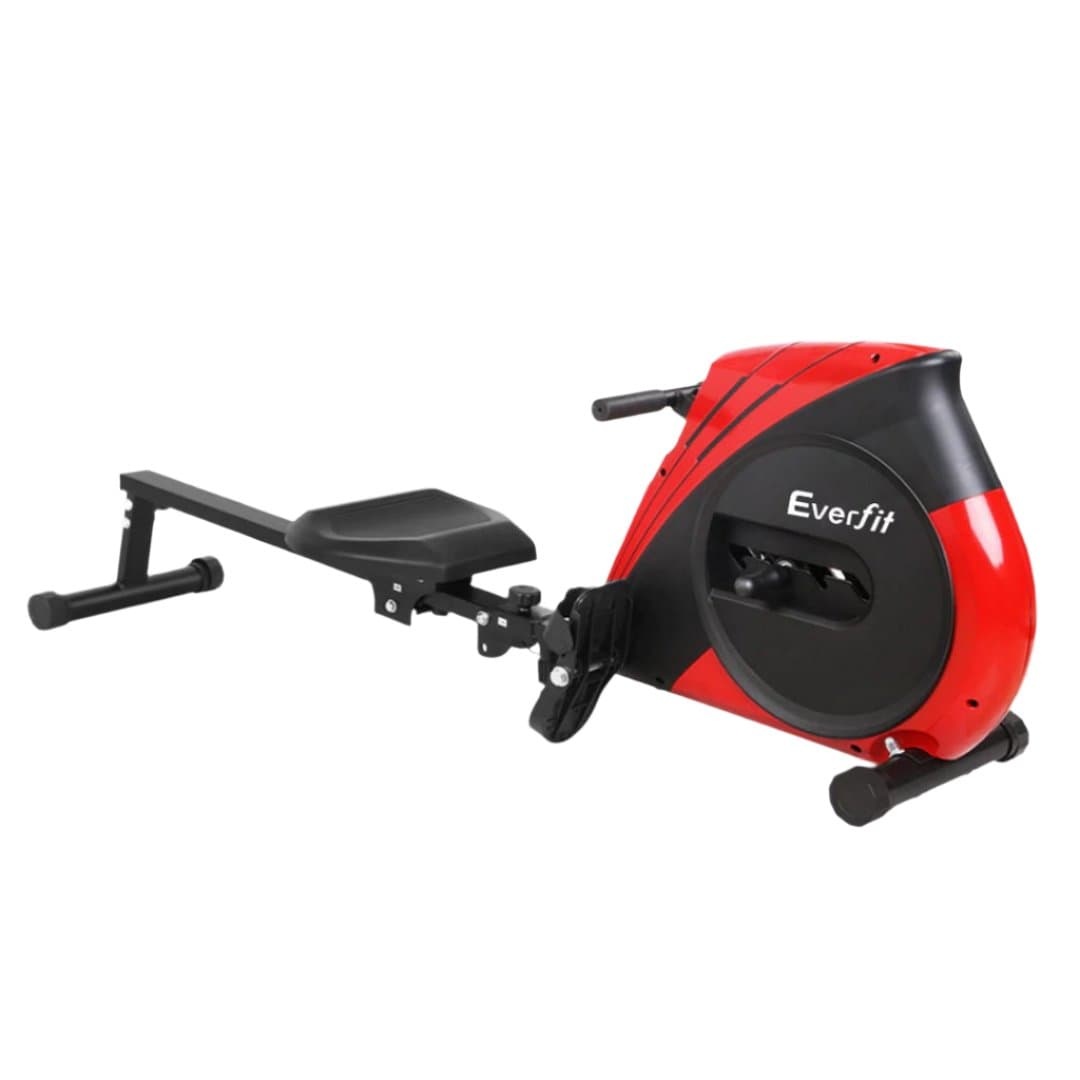
The foldable home rowing machine engages your abs, back and legs, according to its listing. It uses an elastic-rope system with up to four levels of manual resistance, a steel glide rail, a molded seat and adjustable footrests with straps, and it holds users up to 330 lb (150 kg). It folds and has rollers for moving it.
A rower needs a long strip of clear floor for the seat to travel along, plus room for your hands at the finish of each stroke. As with the bike, the listing does not state its dimensions.
A treadmill: the most questions
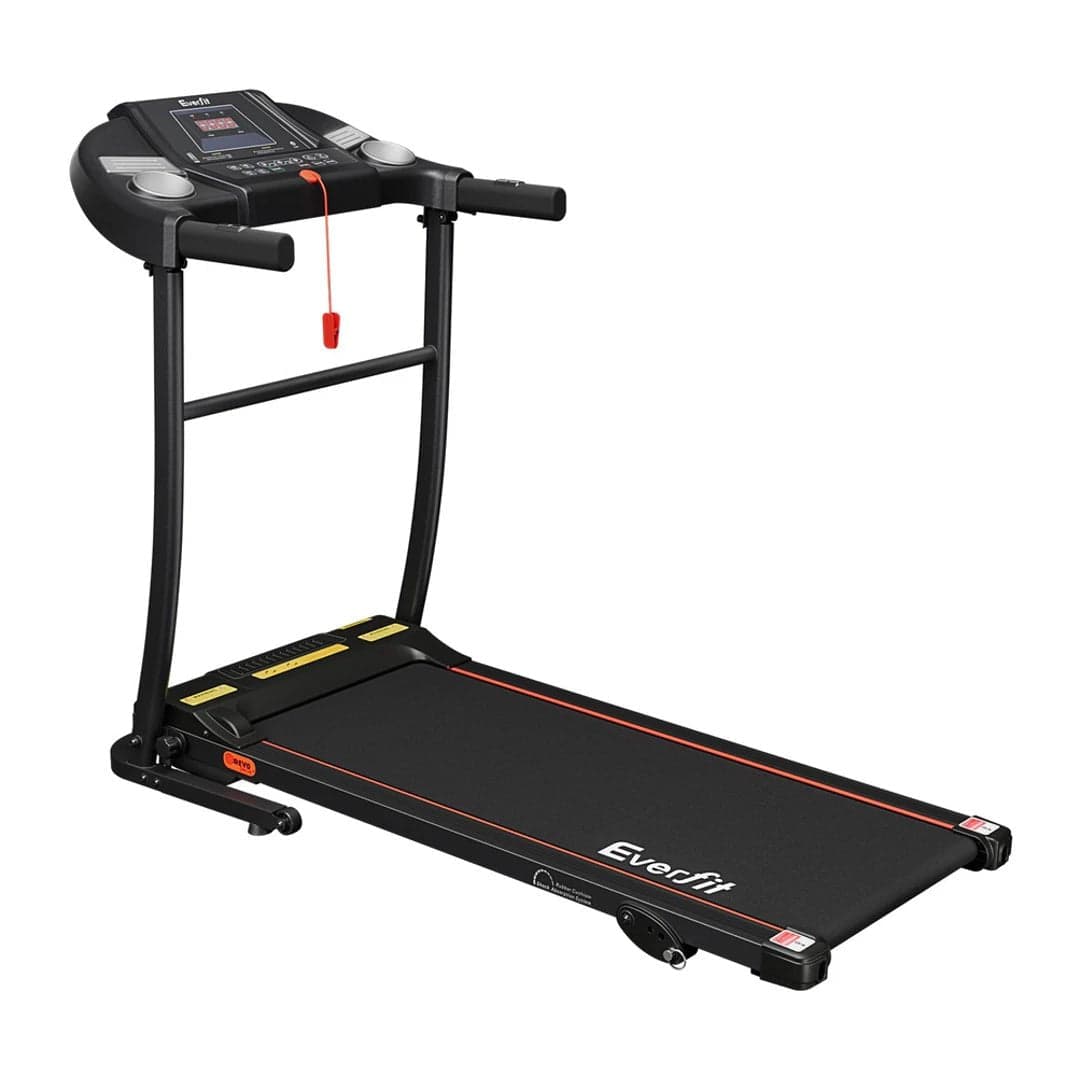
The compact electric treadmill has a powder-coated steel frame, 12 preset programs, speeds from 1 to 12 km/h (about 0.6 to 7.5 mph), three manual incline levels and handlebar pulse sensors. It folds, it has wheels, and it comes with a safety tether key.
What the listing does not give is a maximum user weight or any dimensions. Those are the two numbers that decide whether a treadmill works in an apartment, so we would rather tell you they are missing than let you find out on delivery.
If children live with you, the American Academy of Pediatrics lists treadmills together with stationary bikes, ellipticals and rowing machines as big machines that are dangerous to young children. It advises unplugging exercise machines when they are not in use, removing the safety key and keeping it somewhere separate and secure, supervising young children around home gym equipment, and keeping machines out of areas where children regularly play. Of ours, the treadmill is the one that lists a safety tether key. The supervision and placement advice applies to our bike and rower too.
The under-desk bike: movement while you sit
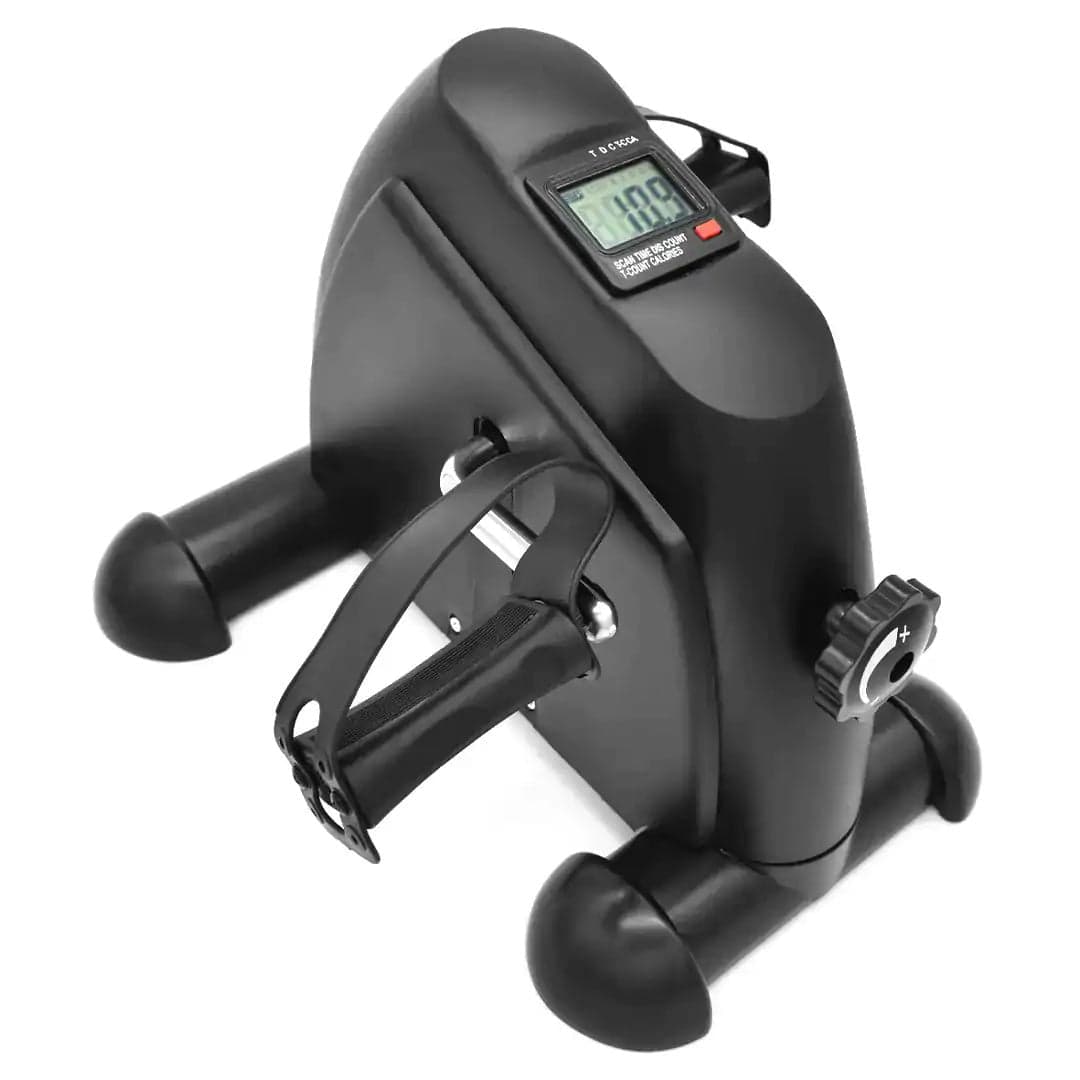
The under-desk exercise bike is pedals, a resistance knob and a small display on a base about 16 by 14 by 12.6 in (41 by 35 by 32 cm), weighing 12 lb (5.5 kg). The listing describes it as fitting under a desk or in tight corners, and says the resistance knob runs from a gentle session to a more challenging ride. It gives no maximum user weight.
The first key guideline for adults in the US Physical Activity Guidelines is to move more and sit less. Pedaling under a desk adds movement to a seated day, but you are still sitting. Use the talk test to judge whether a session counts toward your minutes.
Before you choose
- Measure the floor where the machine will be used, and where it will be stored.
- Check the maximum user weight against your own and that of anyone else who will use it. Where a listing does not state one, do not guess.
- Decide who else will use it. The folding bike states a rider height range; the others do not.
- Think about the floor underneath and anyone living below it.
- If children live with you, plan where the machine goes and where its key or plug is kept.
A machine helps you do the minutes. The NHS advises speaking to your GP first if you have not exercised for some time, or if you have medical conditions or concerns.
Sources
- ODPHP: Top 10 things to know about the second edition of the Physical Activity Guidelines for Americans
- CDC: Adult activity, an overview
- CDC: What counts as physical activity for adults
- NHS: Physical activity guidelines for adults aged 19 to 64
- HealthyChildren.org (AAP): Childproofing home exercise equipment
About this piece. We sell some of the things mentioned here, and the product facts come from their own pages. Health and safety points follow the sources above. They are general information, not medical advice: if something hurts, ask a doctor or physical therapist.
In this piece
The gear we mention
Beautiful Body Adjustable Stair Stepper, 330 lb Max
No reviews yet
$106.99
Beautiful Body Mini Stepper with Bands, 300 lb Max
No reviews yet
$79.99
Beautiful Body Folding Exercise Bike, Steel, 300 lb Max
No reviews yet
$216.99
Beautiful Body Foldable Home Rowing Machine, 330 lb Max
No reviews yet
$150.99
Beautiful Body Compact Electric Treadmill, 12 Programs
No reviews yet
$292.00
Beautiful Body Under-Desk Exercise Bike with LCD Display
No reviews yet
$68.99
Keep reading
More from the training log
- Strength6 min read
A home gym for a small space: what to buy first, and what can wait
A home gym in a small room works when it is bought in the order you will use it. Here is that order, what each piece earns, and what can wait.
- Strength5 min read
Loop, tube, pull-up or fabric: which resistance band does which job
Band titles all sound alike. The shapes are not, and each one suits a different job.
- Recovery5 min read
Foam roller, massage gun, massage ball or cupping set: what each one is for
Four tools for a sore muscle. They differ in how much of you they reach and who sets the pressure, and none of them is a treatment.