Recovery5 min read
Foam roller, massage gun, massage ball or cupping set: what each one is for
Four tools for a sore muscle. They differ in how much of you they reach and who sets the pressure, and none of them is a treatment.
On this page
The first three press on a muscle; the fourth, cupping, pulls on the skin. The difference is how much of the body they cover and who controls the pressure. A foam roller does big areas, quads, calves and upper back, with your bodyweight doing the pressing. A massage gun does targeted spots with your hand in control. A massage ball gets into small places a roller reaches less well, such as the glutes, the soles of the feet and between the shoulder blades.
The research on each is modest, and it is worth knowing what it says before you pick one.
What the evidence says
Foam rolling. A 2019 meta-analysis in Frontiers in Physiology pooled 21 studies. Rolling before exercise gave a small improvement in flexibility and sprint speed, with little effect on jumping or strength. Rolling after exercise slightly reduced how sore people felt. The authors called the effects rather minor, and concluded that the evidence supports foam rolling as a warm-up more than as a recovery tool.
Massage guns. A 2023 systematic review in the Journal of Functional Morphology and Kinesiology found only 11 studies that met its criteria, most with a moderate risk of bias. Massage guns improved flexibility and range of motion in the short term. For strength, balance, agility and explosive work, they either made no difference or made performance worse, and the authors do not recommend them for those.
Cupping. The NIH's National Center for Complementary and Integrative Health says cupping may help reduce pain, but that the evidence for this is not very strong.
In short: in the studies above, foam rolling and massage guns loosened people up for a session, and foam rolling took a little of the edge off soreness afterward. That is worth having, and it is all this page claims for them. We cite no research on massage balls, and the NCCIH says the evidence that cupping reduces pain is not very strong.
Foam rollers
You lie on the roller and move over it slowly, using your bodyweight and your hands and feet to set the pressure. It covers a lot of muscle quickly and needs no charging.
Our EVA foam roller has a hollow plastic core under a gridded EVA surface. It measures 33 by 14 cm (13 by 5.5 in), weighs 830 g (1.8 lb), and the listing says it supports up to 500 lb (227 kg). The EVA foam massage roller is also hollow-cored EVA with a textured surface, in purple, blue or pink.
A roller is the one to start with if you want a short warm-up routine before training, since that is the use the authors say the evidence best supports.
Massage guns
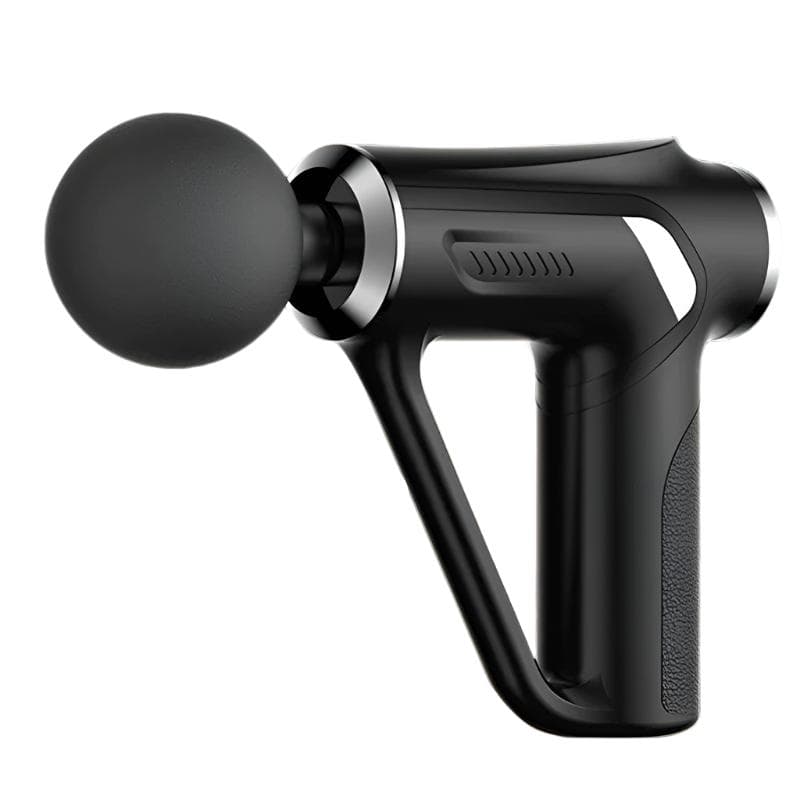
A massage gun hammers a small head into the muscle many times a second while you hold it. You choose the spot, the speed and the pressure, which makes it good for places you can reach with your arm and awkward for your own upper back.
Our percussion massage gun has 32 speed settings, four interchangeable heads and charges over USB-C. Keep it moving rather than parking it on one spot.
The same 2023 review lists situations where a massage gun may not be recommended, and others where its use may be limited. The short version:
- Not over cuts, bruises, sunburn, rashes or skin infections.
- Not on the head, face, neck, chest or spine, over nerves and blood vessels near the surface, or over surgical implants such as plates and pins.
- Not on recent fractures, or if you have a bone condition such as osteoporosis or rheumatoid arthritis.
- Not if you have deep vein thrombosis or a blood clotting disorder (the review says the pressure might dislodge a clot), or diabetes or nerve pain (the review says they can dull sensation, so you may miss an injury).
- Ask a doctor first if you are pregnant, or have high blood pressure, epilepsy, seizures, cancer, fibromyalgia, migraines or a hernia, or if you have a pacemaker or another implanted device or implanted medication.
- Not aggressively on one area for long periods; the review gives more than 30 minutes as an example of too long.
Massage balls
A ball is used the same way as a roller, over a smaller area. Put it between you and a wall or the floor and lean in. It reaches the glutes, the hips, the soles of the feet and the muscles beside the shoulder blades, which a roller mostly misses.
The rubber yoga massage ball is solid, high-density rubber, in three colors, with nothing to charge. The electric vibrating massage ball is 9 cm (3.5 in) across, weighs 510 g (1.1 lb), recharges over USB and has several vibration settings. Choose the plain ball if you want simple and silent, and the vibrating one if you like the feel of vibration under pressure.
Cupping
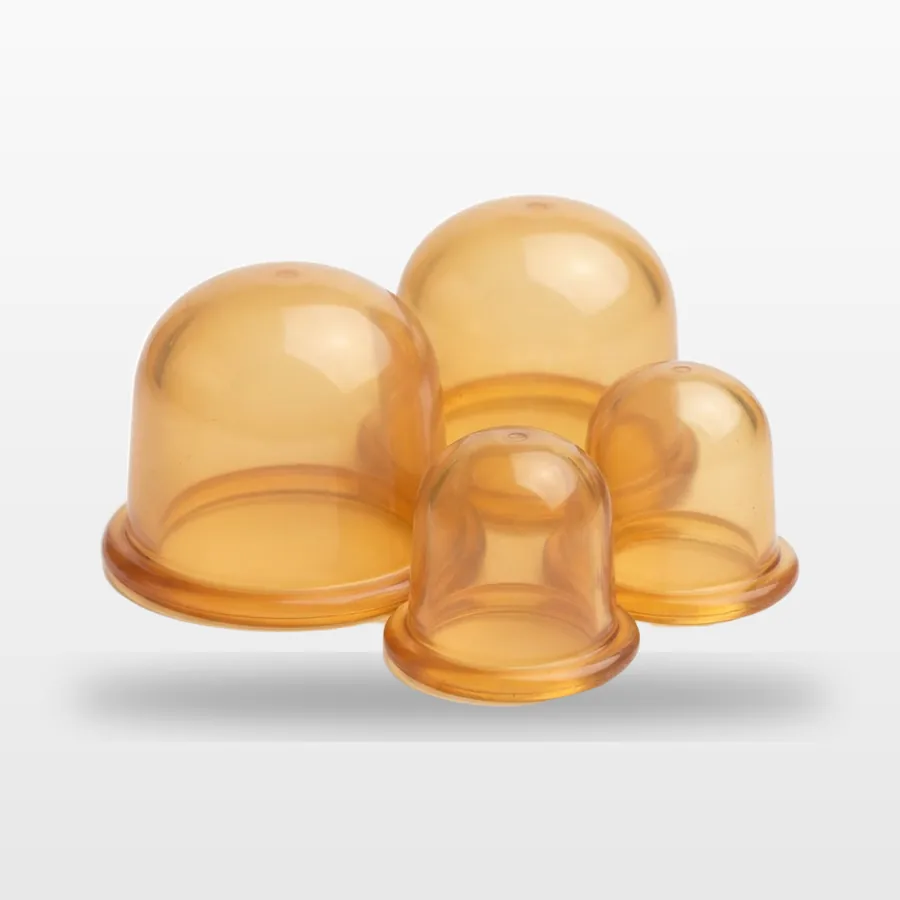
Cupping uses suction to pull the skin up rather than pressing down on it. Our silicone cupping set is four cups with a twist valve, so you set the suction with one hand and change it without breaking the seal. It is a way to work the tissue, not a treatment. Keep it off eczema and psoriasis, which the NCCIH says cupping may worsen.
The NCCIH lists persistent skin discoloration, scars, burns and infections among the side effects of cupping. It also warns against using the same equipment on more than one person without sterilizing it in between. Keep your set to yourself.
Which one first
| Foam roller | Massage gun | Massage ball | |
|---|---|---|---|
| Covers | Large areas: quads, calves, upper back | Targeted spots you can reach | Small areas: glutes, feet, shoulder blades |
| Pressure set by | Your bodyweight | Your hand and the speed setting | Your lean against a wall or floor |
| Power | None | Rechargeable | None, or rechargeable for the vibrating ball |
| Best used | As part of a warm-up | For stiffness and range of motion, not around strength or explosive work | Small or awkward spots a roller misses |
For most people the roller comes first: it covers the most ground, is the easiest to learn, and is the one with the most studies behind it in this piece. Add a ball for the spots it misses. A gun is a convenience, not an upgrade.
Where not to use them
The cautions above come from the massage gun review and the NCCIH's page on cupping. We found no comparable source for foam rollers or massage balls, so we are not extending them to those tools.
Our own rule for all four: if something hurts in a way that is new or sharp, stop and ask a doctor or physical therapist.
Sources
About this piece. We sell some of the things mentioned here, and the product facts come from their own pages. Health and safety points follow the sources above. They are general information, not medical advice: if something hurts, ask a doctor or physical therapist.
In this piece
The gear we mention
Beautiful Body Percussion Massage Gun for Muscle Recovery
No reviews yet
$38.99
Beautiful Body Silicone Massage Cupping Set for Recovery
Health & Wellness · Recovery
No reviews yet
$27.99
Keep reading
More from the training log
- Strength6 min read
A home gym for a small space: what to buy first, and what can wait
A home gym in a small room works when it is bought in the order you will use it. Here is that order, what each piece earns, and what can wait.
- Strength5 min read
Loop, tube, pull-up or fabric: which resistance band does which job
Band titles all sound alike. The shapes are not, and each one suits a different job.
- Cardio5 min read
Stepper, bike, rower or treadmill: choosing cardio for a small apartment
Six machines, compared on the numbers that decide whether one fits your apartment, with a plain note wherever a listing does not give them.