Strength5 min read
Loop, tube, pull-up or fabric: which resistance band does which job
Band titles all sound alike. The shapes are not, and each one suits a different job.
On this page
Most resistance bands come in one of five shapes, and each shape suits a different job. Flat loops are for short-range work around the legs and arms. Tubes with handles and a door anchor imitate a cable machine. Long fabric loops take some of your weight on a pull-up. Wide fabric hip circles go around the thighs for squats and bridges. A figure 8 is a compact band with a handle in each loop.
Product titles do not make this obvious, so this piece goes shape by shape, with one or two of ours for each: what they are made of, and what they are rated to where the listing gives a figure.
What any band can do
Bands count as strength training. The CDC lists working with resistance bands alongside lifting weights as muscle-strengthening activity, and the American College of Sports Medicine's 2026 resistance training guidelines report marked benefits in strength from elastic bands and home-based routines.
A band behaves differently from a weight in one way worth knowing: it gets harder the further you stretch it. The start of a press is light and the lockout is heavy. That suits squats and presses, which get easier near the top, and it means where you stand changes the load as much as which band you pick.
| Shape | Best for | Ours |
|---|---|---|
| Flat latex loop | Legs, glutes, shoulders, travel | Latex set, 5 bands |
| Tube with handles | Cable-style presses, rows, pulldowns | Stackable set, 10 to 50 lb |
| Long fabric loop | Pull-up help, mobility work, lower-body work | Pull-up set, 3 bands |
| Fabric hip circle | Squats, bridges, side steps | Cotton hip band |
| Figure 8 | Flexibility, strength and mobility work | Figure 8 with foam grips |
Flat latex loops
Short, flat, closed loops. You step into them or put your hands inside them, which makes them the quickest band to set up and the easiest to pack. Our latex resistance band set is five loops from light to heavy. They are at their best on glute and hip work, shoulder work with the band around the wrists, and as a light warm-up before loaded sets.
The limit is length. A short loop cannot reach from the floor to overhead, so full presses and pulldowns need a longer band.
Tubes with handles
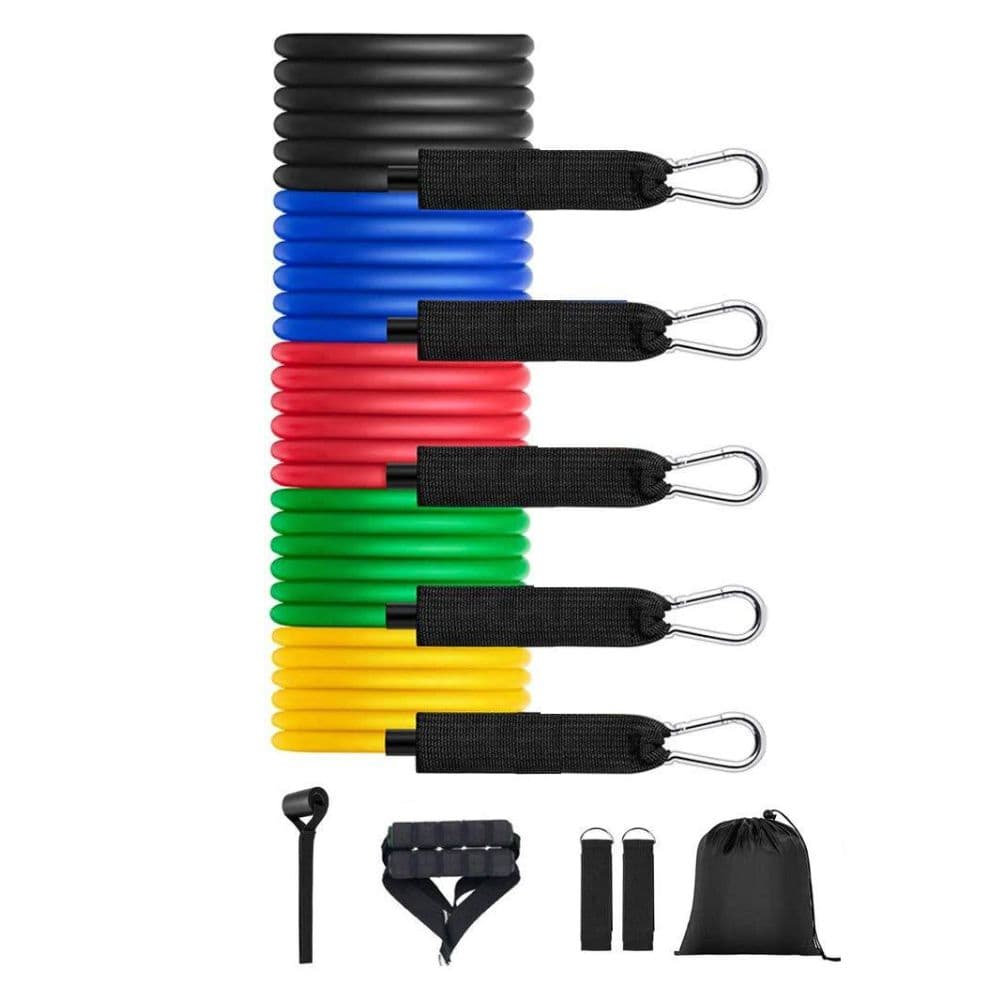
This is the band that stands in for a cable machine. Our stackable resistance band set has five natural latex tubes rated at 10, 20, 30, 40 and 50 lb (about 4.5, 9, 14, 18 and 23 kg). Clip several to the same handle and they stack, up to 150 lb (68 kg) with all five. The set includes two handles, two ankle straps, a door anchor and a carrying case.
The door anchor is what turns it into a cable station: chest presses, rows and pulldowns from the height of a door. Any anchor point is worth respecting. Eye doctors who reviewed 11 patients with eye injuries from exercise bands found that every one described the band slipping from its anchoring point and recoiling into the eye. The report does not single out door anchors: the bands in it were anchored under the feet or to a heavy, fixed object. In practice:
- Check the band and the anchor before you start. The report recommends careful inspection of equipment for wear and overuse.
- Consider sports goggles: the doctors who wrote the report say using them would decrease how often these injuries happen.
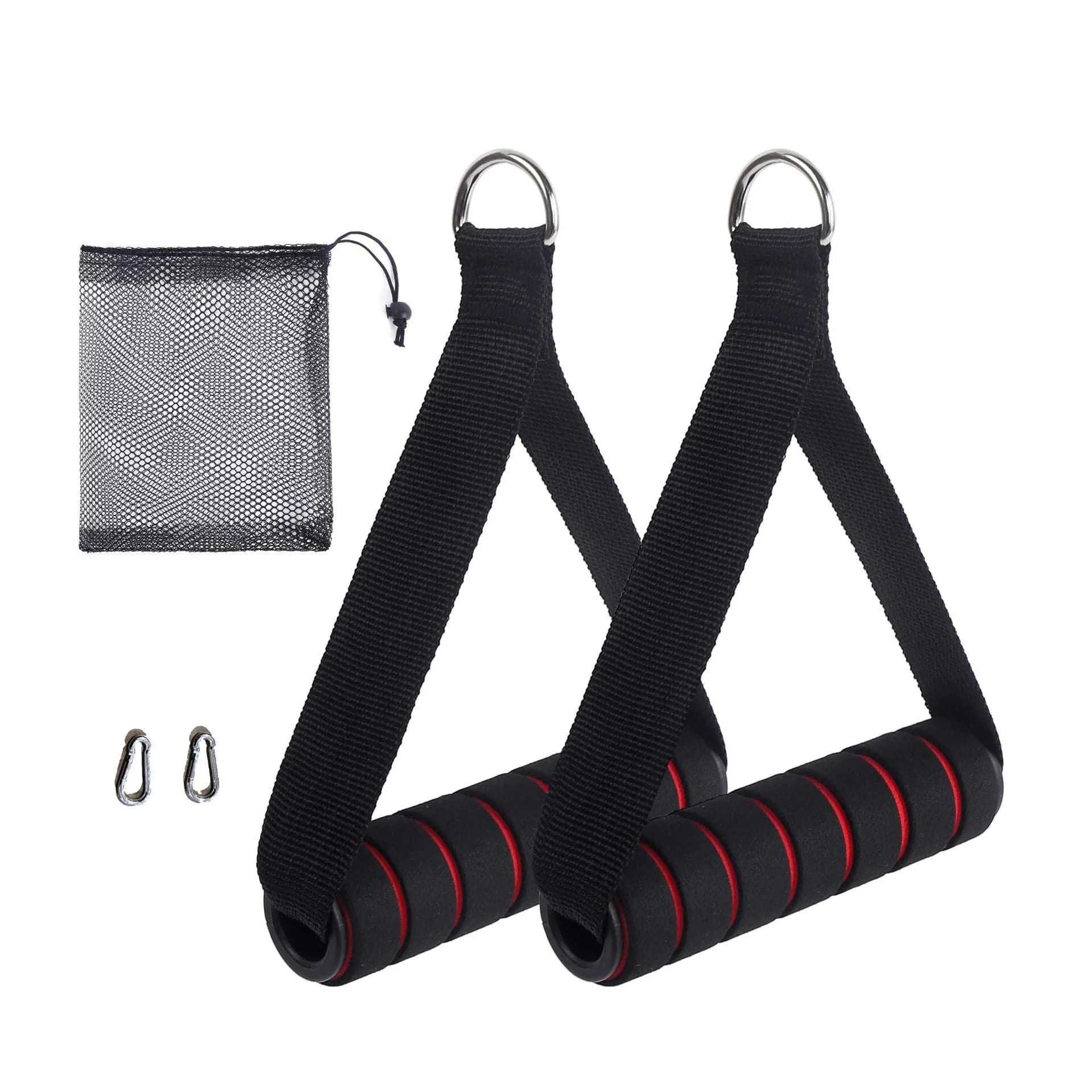
If you want a separate set of handles, for a cable machine at the gym or to swap between your own bands, the heavy-duty D-ring handles are metal, and the D-ring clips to most cable systems and bands.
Long fabric loops, for pull-ups
A long loop hooked over a pull-up bar, with a foot or a knee inside it, takes some of your bodyweight. It helps most at the bottom, where it is stretched furthest, and least near the bar. The thicker the band, the more help it gives, so you progress by moving to a thinner one.
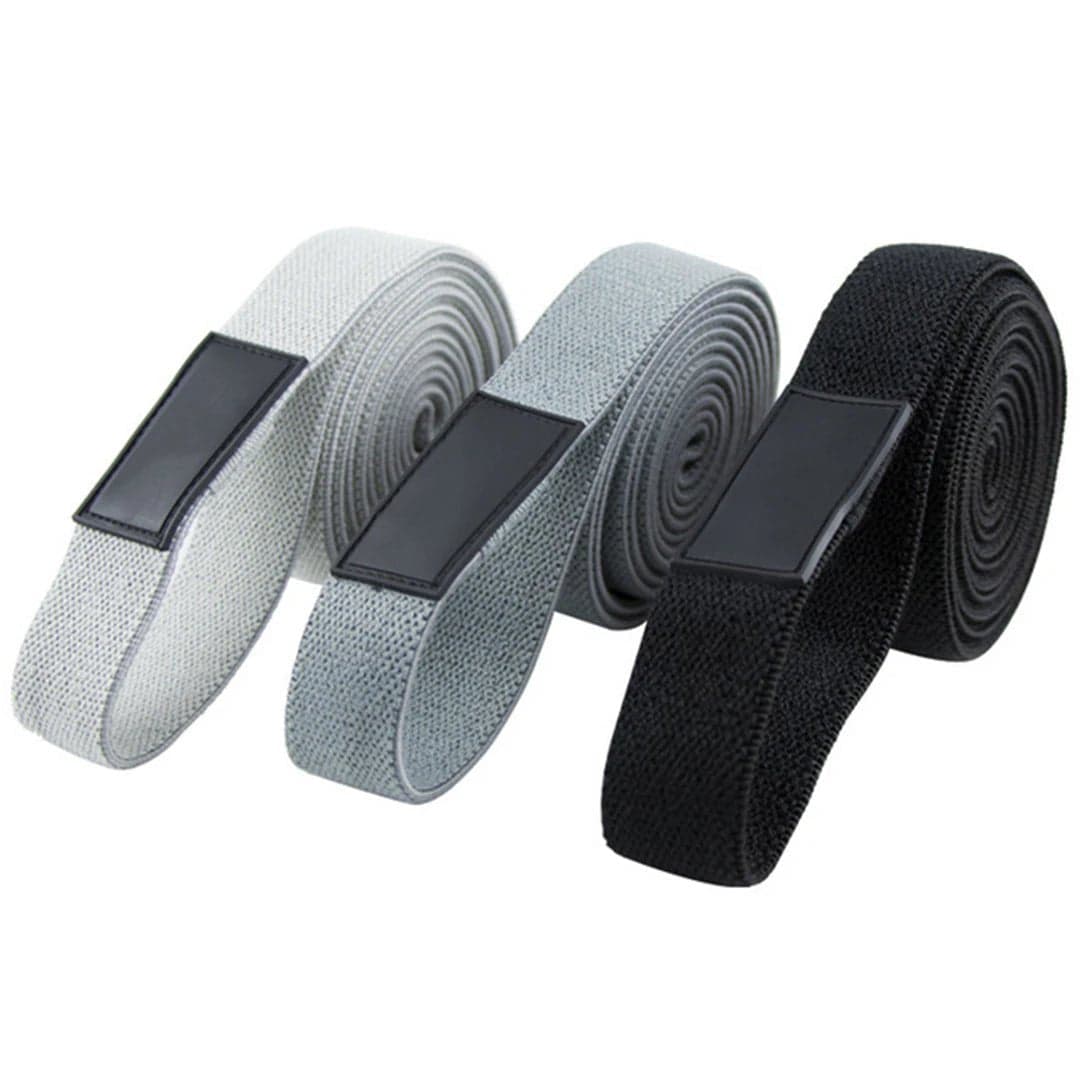
Our pull-up resistance band set is three long loops in cotton polyester fabric: light, medium and heavy, which the listing rates at up to 15, 25 and 35 lb (about 7, 11 and 16 kg). The set comes with a carrying bag. The listing also names mobility work and lower-body exercises.
Fabric hip circles
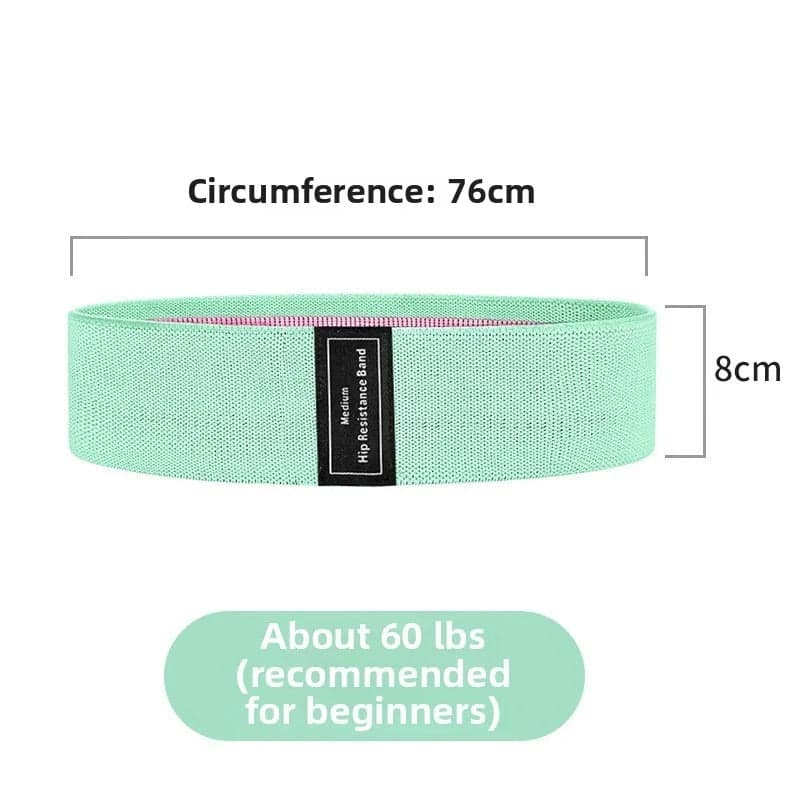
A hip circle is a short, wide band worn around the thighs just above the knees. Pushing your knees out against it during squats, bridges and side steps is the whole exercise, so it adds a job to movements you already do rather than asking for new ones.
Our cotton hip resistance band is a cotton and latex blend, in green, pink or purple, or as a three-color option. The listing does not give a resistance rating for it.
Figure 8 bands
Two loops joined in the middle, with a handle in each. The figure 8 band with foam grips is made of TPR, a thermoplastic rubber, with soft foam handles, and measures about 38 by 7.7 cm (15 by 3 in). The listing calls it compact, lightweight and easy to carry, and says it supports flexibility, strength and mobility exercises. There is one band and one level, so it is a second band rather than a whole program.
Latex, and who should skip it
The loop set, the stackable tubes and the hip band all contain latex. The American College of Allergy, Asthma and Immunology advises people with a latex allergy to avoid direct contact with products that contain it, and a band is held in the hand or worn against the skin for every set. If that is you, read the description on each product page before you buy. The pull-up loops are listed as cotton polyester, and the listing does not say whether they contain latex, so ask us before you order. Ask your doctor if you are unsure what is safe for you.
Picking the right resistance
The CDC's guide for strength work is a useful way to choose a band: pick the one that makes the exercise hard to repeat by about the 8th to 12th rep. If the 12th rep is still easy, the band is too light for that exercise. If you cannot reach 8 reps, it is too heavy, or you are standing too far from the anchor.
Expect to use different bands for different moves. A row usually takes a heavier band than a lateral raise, and legs usually take the heaviest of all. That is why sets come in levels.
Looking after bands
- Wipe them clean after use, and let them dry before you put them away.
- Store them out of direct sunlight, which the figure 8 listing specifically warns against.
- Keep them away from sharp edges: a door hinge, a rough bench frame, a ring on your finger.
- Inspect bands for wear and overuse before you use them, as the eye-injury report recommends.
Sources
About this piece. We sell some of the things mentioned here, and the product facts come from their own pages. Health and safety points follow the sources above. They are general information, not medical advice: if something hurts, ask a doctor or physical therapist.
In this piece
The gear we mention
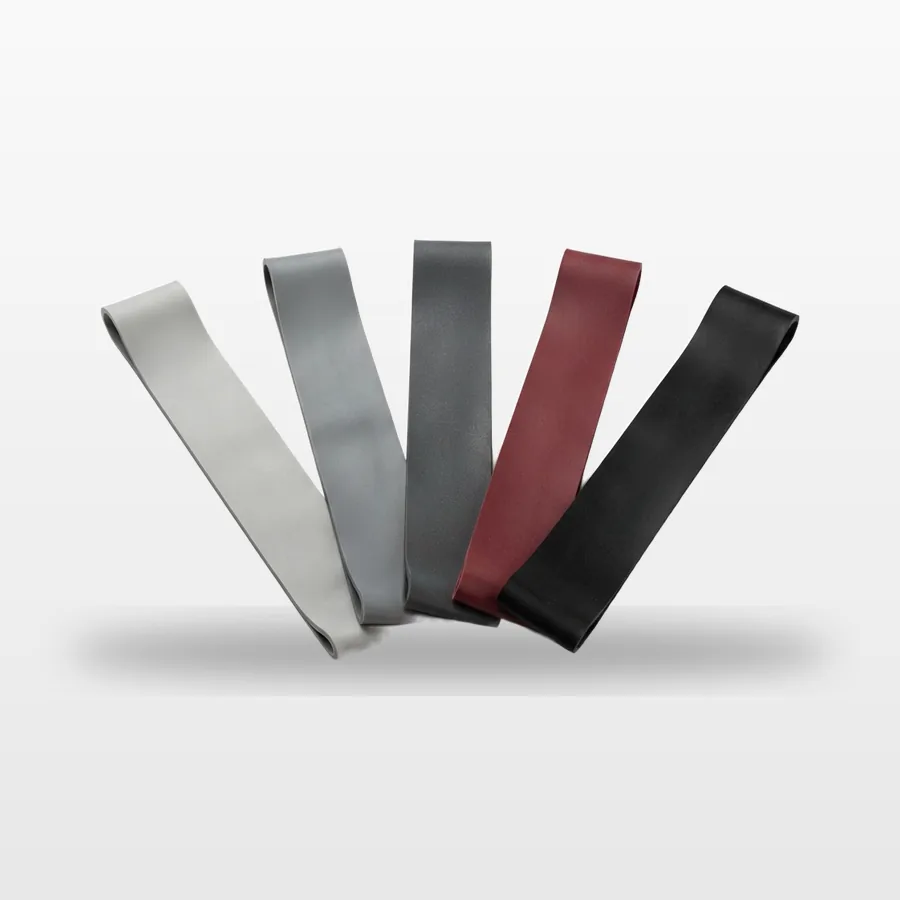
Beautiful Body Latex Resistance Band Set, 5 Bands
Workout Essentials · Conditioning
No reviews yet
$18.99
Beautiful Body Stackable Resistance Band Set, 10 to 50 lb
No reviews yet
$32.99
Beautiful Body Heavy-Duty D-Ring Handles for Cable and Bands
No reviews yet
$10.99
Beautiful Body Pull-Up Resistance Band Set, 15 to 100 lb
No reviews yet
$25.99
Beautiful Body Cotton Hip Resistance Band for Squats
No reviews yet
$14.99
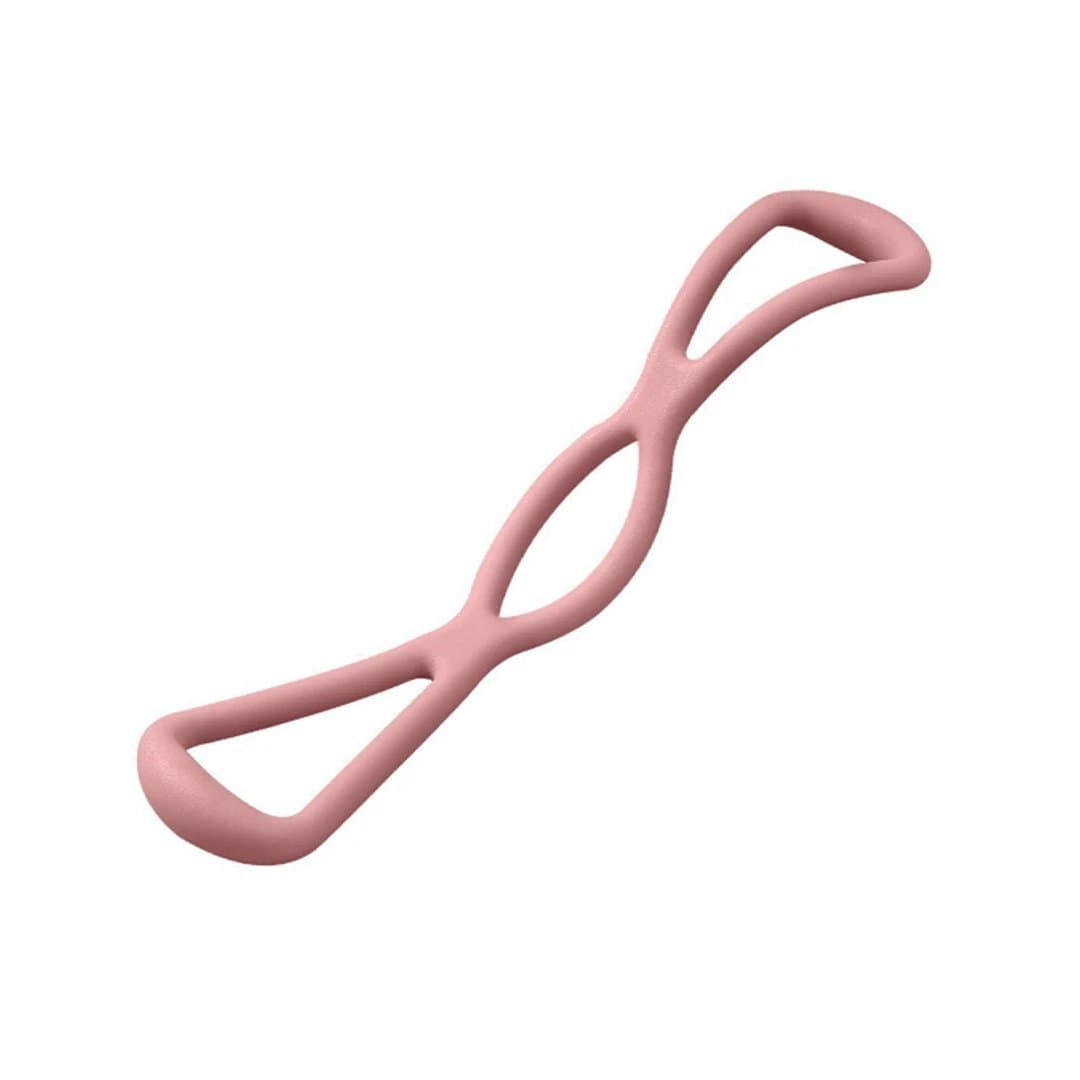
Beautiful Body Figure 8 Resistance Band with Foam Grips
No reviews yet
$23.99
Keep reading
More from the training log
- Strength6 min read
A home gym for a small space: what to buy first, and what can wait
A home gym in a small room works when it is bought in the order you will use it. Here is that order, what each piece earns, and what can wait.
- Cardio5 min read
Stepper, bike, rower or treadmill: choosing cardio for a small apartment
Six machines, compared on the numbers that decide whether one fits your apartment, with a plain note wherever a listing does not give them.
- Recovery5 min read
Foam roller, massage gun, massage ball or cupping set: what each one is for
Four tools for a sore muscle. They differ in how much of you they reach and who sets the pressure, and none of them is a treatment.