Outdoors4 min read
Running after dark: how to be seen by drivers
Runners tend to think drivers can see them sooner than they can. Where you wear the lights and reflective gear matters, not only whether you wear them.
On this page
Wear both lights and reflective material, and put some of it on the parts of you that move: ankles, knees, wrists. Choose a lit route with little traffic, and where the sidewalk is missing or poorly maintained, run facing the traffic. That is most of the answer, and the rest of this piece explains why each part matters.
In the fall, the evening run that started in daylight in August now starts in the dark. The kit is simple. The harder part is accepting that drivers may see you later than you think.
You are harder to see than you think
A 2016 review of the research on pedestrians at night, in Clinical and Experimental Optometry, makes three points worth knowing before you buy anything.
- Drivers see less at night than they think. The review names drivers' visual limitations at night as a leading contributor to night-time crashes involving pedestrians, and notes that drivers typically "overdrive" the useful range of their headlight beams.
- Pedestrians overestimate how visible they are. People on foot tend to believe drivers can see them sooner than they can, and underestimate how much it depends on what they are wearing.
- Where the reflective material sits matters. Reflective markings on the arms and legs make a person easier to recognize, because the moving limbs read as a human being in motion. The same material on the torso alone, such as a vest, does less.
A 2014 study tested that on a closed road at night. Drivers recognized pedestrians more often, and from farther away, when the pedestrians wore reflective tape on their moving joints than when they wore a reflective vest. Older drivers recognized pedestrians at about half the distance younger drivers did. You cannot choose who is driving, so dress for the driver who sees least.
Reflective and lit do different jobs
Reflective material sends a car's own headlight back toward the driver, while a light makes its own. The CDC advises wearing bright and reflective clothing and using lights when it is dark, so near traffic after dark, wear both.
| Where on you | What to wear | Why there |
|---|---|---|
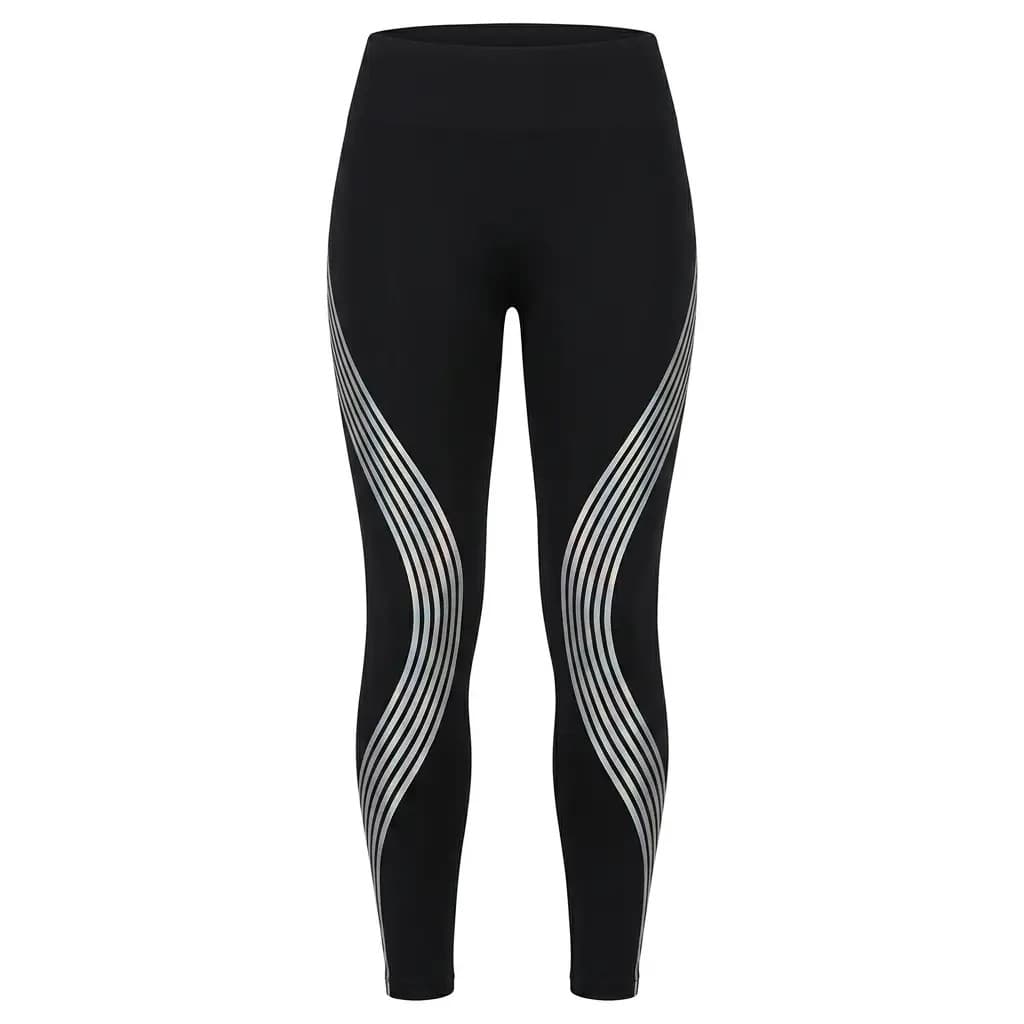
| Legs and ankles | Reflective print, a clip-on light on a shoe | They move the most, which is what makes a shape read as a person |
| Arms and wrists | An LED armband | Swings with every stride |
| Torso | A reflective vest with a light strip | The largest surface, best paired with the two above |
| Head | A headlight | To light your path, not only to be seen |
The kit, from the ground up
Reflective leggings
The reflective wave-stripe leggings have a reflective laser-stripe print that catches camera flash and headlights, on a high-waisted stretch fabric, in sizes S to XL. Because the print is on your legs, it moves with every stride. The research above tested reflective tape on the limbs and joints. The listing for these leggings says only that the print catches camera flash and headlights, so pair them with a light. Machine wash cold and do not iron over the print.
A clip-on strobe
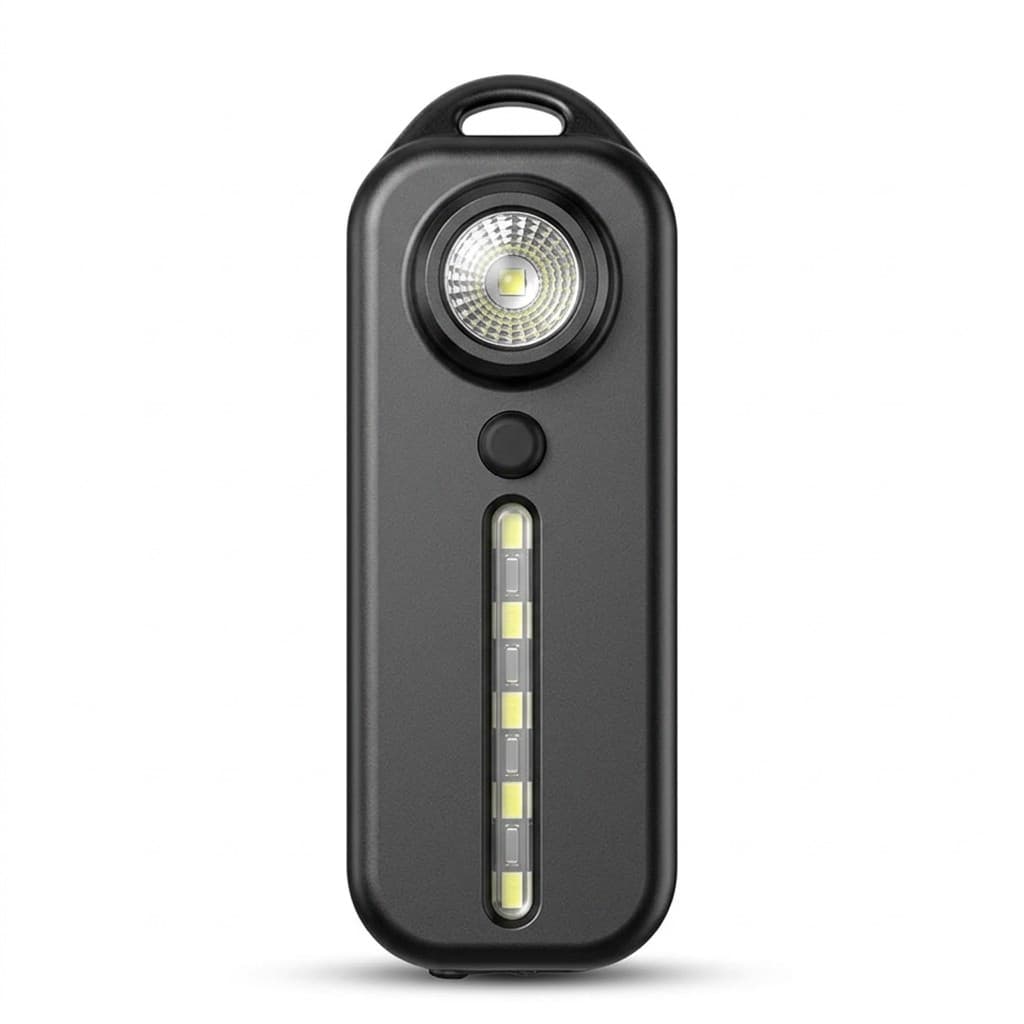
The clip-on strobe safety light is a small USB-rechargeable light with a red or blue LED in a plastic housing. It clips to a bag, a sleeve, a belt or a shoe. Type A or Type B is one light, and Type A and B is two. Clipped to a shoe, it moves with your feet.
An LED armband
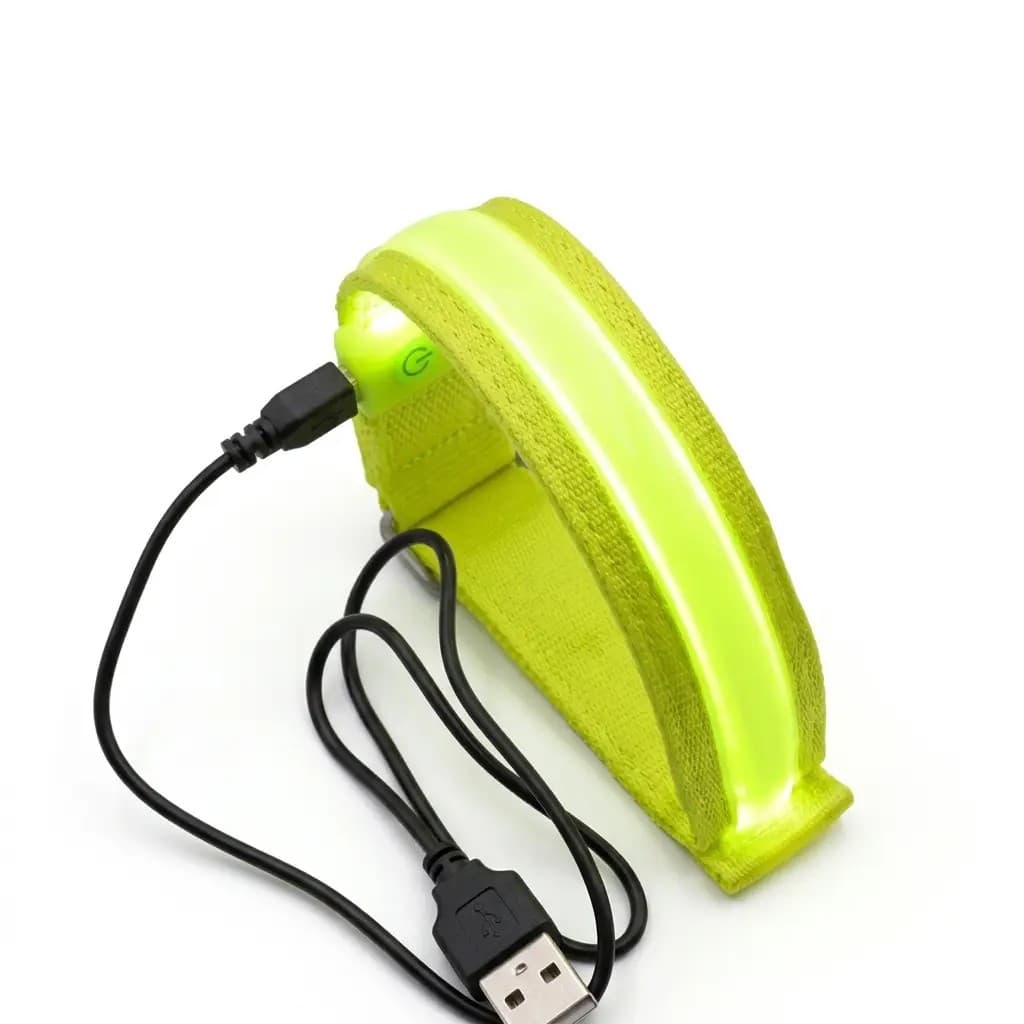
The rechargeable LED armband is a USB-rechargeable light on a reflective woven strap. It adjusts to fit over a sleeve or a bare arm, and comes in blue or multicolor. Each one is a single armband, so order two if you want one on each arm. Where traffic drives on the right, running facing traffic puts you on the left side of the road, and your right arm is the one nearest the cars.
A reflective vest with a light
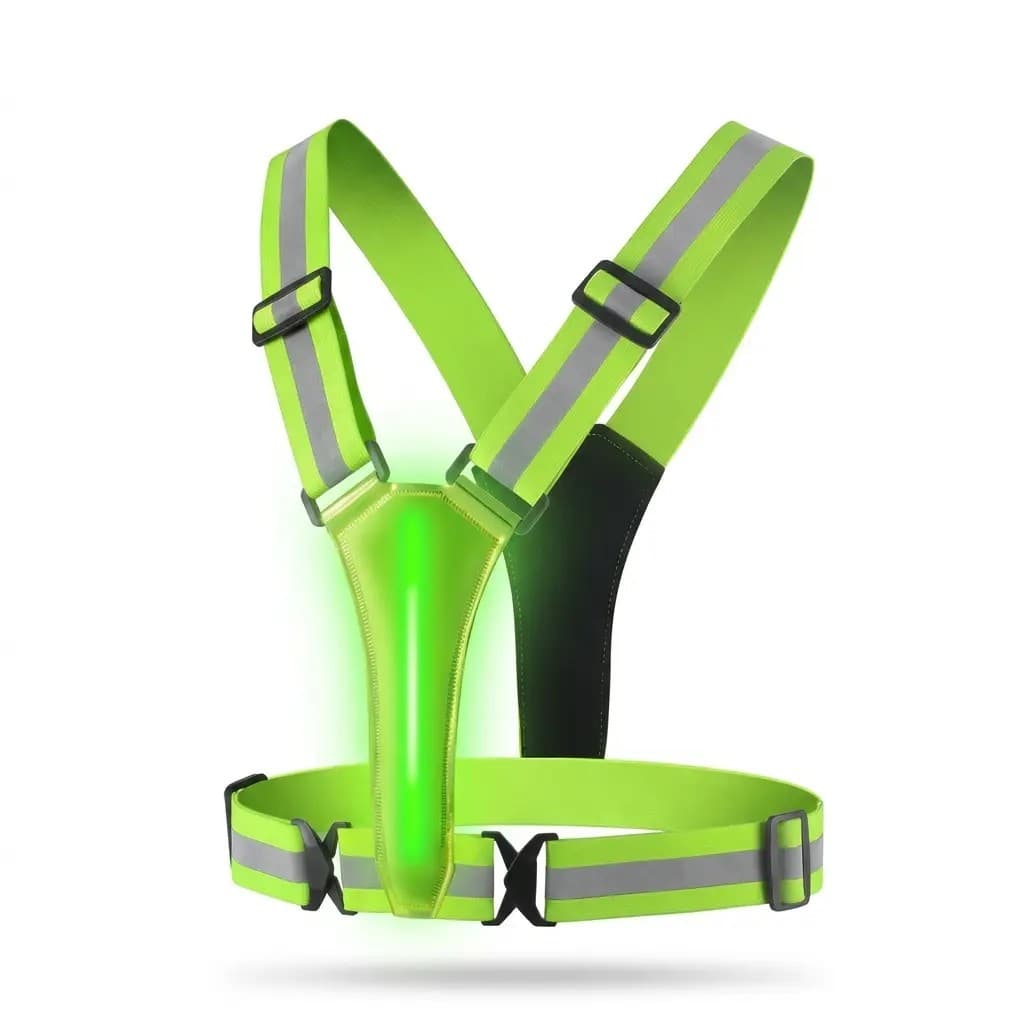
The LED reflective safety vest is woven elastic reflective fabric with a built-in rechargeable LED strip. It is one size and adjustable, so it goes over whatever layer you are wearing, in black, blue, green, orange, pink or yellow. The reflective fabric still works when the light is off. Given what the research says about vests, treat it as the base layer of being seen, and add something on your arms or legs.
A beanie with a headlight
The LED headlight running beanie is a knit hat with a built-in LED headlight, one size, in six colors, including fluorescent green and fluorescent yellow. The listing says it lights your path on dark runs, and that the fluorescent colors add passive visibility.
Route and habits
Gear is only part of it. The CDC's advice for walking safely is a good base for running too: wear bright and reflective clothing, use lights when it is dark, choose low-speed, low-traffic roads, and where there are poorly maintained sidewalks or none at all, go facing traffic. The NHS's Couch to 5K guidance adds running on routes with plenty of lighting, staying aware of your surroundings, especially if you wear headphones, and running with a friend or a group.
- Charge every light the day before, not on the way out the door.
- Pick a lit route you already know from daylight runs.
- Run facing traffic where sidewalks are poorly maintained or missing, as the CDC advises for people on foot.
- If you run with headphones, stay aware of your surroundings and watch for other pedestrians, cyclists and vehicles.
- Run with a friend or in a group where you can.
- At crossings, do not assume a driver has seen you just because you can see them.
No light or vest guarantees that a driver sees you, so keep your own attention on crossings and corners as well.
Sources
- Tyrrell et al. (2016), Clinical and Experimental Optometry: The conspicuity of pedestrians at night, a review
- Wood et al. (2014), Ophthalmic and Physiological Optics: Seeing pedestrians at night, effect of driver age and visual abilities
- CDC: Making walking and rolling safer
- NHS: Get running with Couch to 5K
About this piece. We sell some of the things mentioned here, and the product facts come from their own pages. Health and safety points follow the sources above. They are general information, not medical advice: if something hurts, ask a doctor or physical therapist.
In this piece
The gear we mention
Reflective Wave-Stripe Leggings - High-Waist Night Training Tights
No reviews yet
$42.99
Clip-On Strobe Safety Light - Rechargeable Night Training Clip
No reviews yet
$21.99
Rechargeable LED Armband - Reflective Night Training Safety
No reviews yet
$18.99
LED Reflective Safety Vest - USB Rechargeable Light for Night Runs
No reviews yet
$28.99
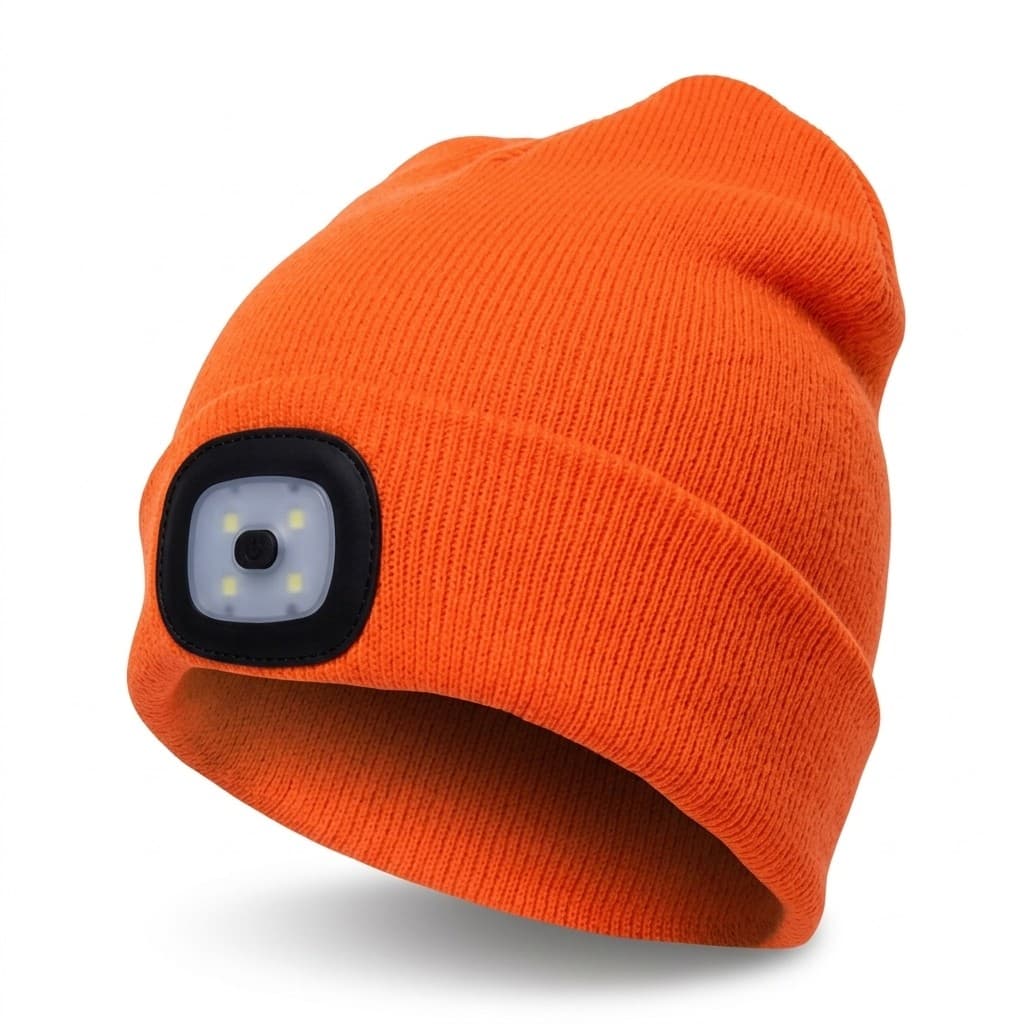
LED Headlight Running Beanie - Cuffed Knit Hat for Night Training
No reviews yet
$22.99
Keep reading
More from the training log
- Strength6 min read
A home gym for a small space: what to buy first, and what can wait
A home gym in a small room works when it is bought in the order you will use it. Here is that order, what each piece earns, and what can wait.
- Strength5 min read
Loop, tube, pull-up or fabric: which resistance band does which job
Band titles all sound alike. The shapes are not, and each one suits a different job.
- Cardio5 min read
Stepper, bike, rower or treadmill: choosing cardio for a small apartment
Six machines, compared on the numbers that decide whether one fits your apartment, with a plain note wherever a listing does not give them.